
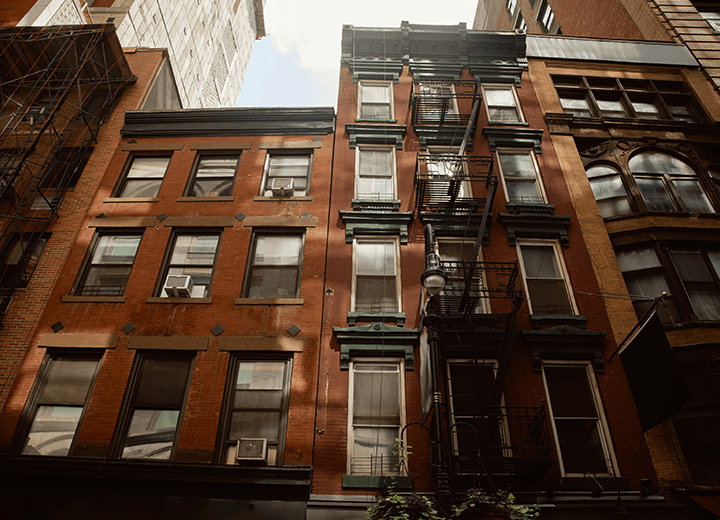
Brownstone Restoration NYC
Brownstone restoration in NYC for facades that are flaking, crumbling, or covered in old patches that no longer match. We rebuild damaged brownstone to sound stone and finish it to match the original color, texture, and carved detail.
- Licensed & Insured
- Stone Color & Texture Matched
What Is Brownstone Restoration?
Brownstone restoration is the repair of a brownstone facade using methods that match the original stone and protect what’s left of it. Damaged stone is cut back until only sound stone remains, then the surface is rebuilt in layers with a specially mixed restoration mortar, and the final coat is tinted and tooled so it blends with the stone around it.
Brownstone is a soft, layered sandstone, and that’s why it fails the way it does. Water works into the layers, freezes, and pushes them apart until the face peels off in sheets. Much of it was also set with its layers standing on edge, which makes the peeling worse. Good restoration works with the stone instead of against it, which is why hard cement patches, the most common quick fix, usually make the damage worse over time.
Brownstone Restoration in NYC That Respects the Original Stone
A brownstone facade is the face of the whole block, so a repair that looks wrong stands out for decades. We restore brownstone the way preservation guidelines call for, building the new surface up in layers so it bonds to the sound stone beneath, then matching color and texture on site until the repair disappears into the facade. When a detail has worn away, we rebuild its profile instead of smoothing it over.
Patching and Resurfacing
Flaking areas rebuilt in layers, from small patches to full resurfacing of a deteriorated facade.
Stone Replacement
Stone too far gone to patch replaced with new pieces cut and set into the facade.
Details and Moldings
Window hoods, moldings, lintels, and sills rebuilt to their original shape and profile.
Signs Your Brownstone Needs Restoration
Brownstone damage usually starts small and speeds up once the outer layer is gone, because the exposed stone soaks up water even faster.
These are the warning signs we see most on NYC brownstones, and the earlier they’re handled, the more original stone can be saved.
Flaking Stone Layers
Thin sheets of stone peeling away from the facade.
Failed Old Patches
Patches that have cracked, hollowed out, or turned the wrong color.
Cracked Lintels and Sills
Brownstone pieces above and below windows cracking apart.
Sandy, Crumbling Surface
Stone that rubs off like sand when touched.
Worn Carved Details
Window hoods and moldings losing their shape.
Stone on the Sidewalk
Fragments falling from the facade, a sign to act quickly.
How We Restore Brownstone in NYC
Every brownstone restoration follows the same layered method, whether it’s one window hood or a full facade.
01
Facade Survey & Samples
We map the damage and prepare color and texture samples against the original stone.
02
Cut Back to Sound Stone
All loose and decayed stone is removed by hand until a solid base remains.
03
Build Up in Layers
The surface is rebuilt in successive coats that key into the sound stone.
04
Tint, Tool & Finish
The top coat is tinted and tooled to match the stone's color and texture.
NYC Landmark Rules for Brownstone Restoration
A large share of NYC’s brownstones sit in historic districts, so Landmarks rules shape most brownstone work in the city.
Landmarks Approval
In historic districts, brownstone repair needs LPC approval. LPC's rules let its staff review and approve standard brownstone repair methods that use a cementitious restoration mortar.
Samples First
LPC permits often require patching and mortar samples to be installed and reviewed before the main work starts.
Scaffolding Over the Sidewalk
Upper-floor brownstone work usually needs scaffolding, which requires its own permit and pedestrian protection.
What Affects Brownstone Restoration Cost in NYC
Brownstone restoration is priced after we survey the facade. These four factors shape the cost most.
Extent of Damage
Small patches versus full resurfacing of the facade.
Carved Details
Window hoods, moldings, and ornament that need rebuilding.
Height & Scaffolding
Parlor-floor repairs versus work reaching the top floor.
Landmark Requirements
Samples, approvals, and documentation for historic districts.
Why Choose Us for Brownstone Restoration in NYC
Brownstone is unforgiving. A patch mixed too hard, too dark, or too smooth shows from the street and often damages the stone around it. Our work is judged by how little of it you can see.
Layered Repairs, Done Right
Built up in coats, never one thick cement patch.
Details Rebuilt, Not Erased
Moldings and hoods restored to their original profile.
Color Matched on Site
Samples checked against your stone before we start.
Landmark-Ready Documentation
Photos and samples prepared for LPC review.
What NYC Homeowners Say About Our Brownstone Work
4.6 /5
“Our brownstone façade had cracks, worn edges, and several damaged areas. The restoration kept the original look of the building while making the front feel properly maintained again.”
Recent Brownstone Restoration Projects in NYC
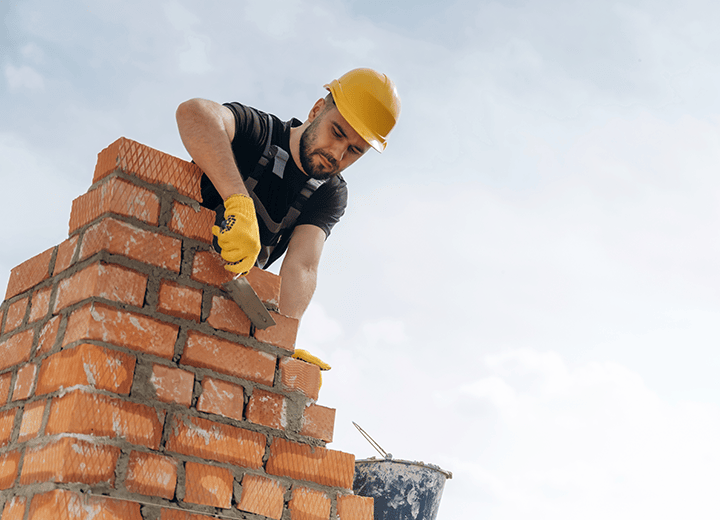
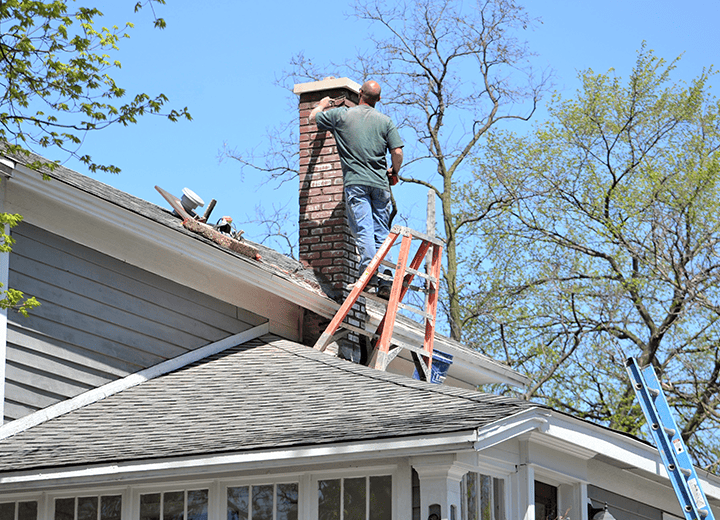
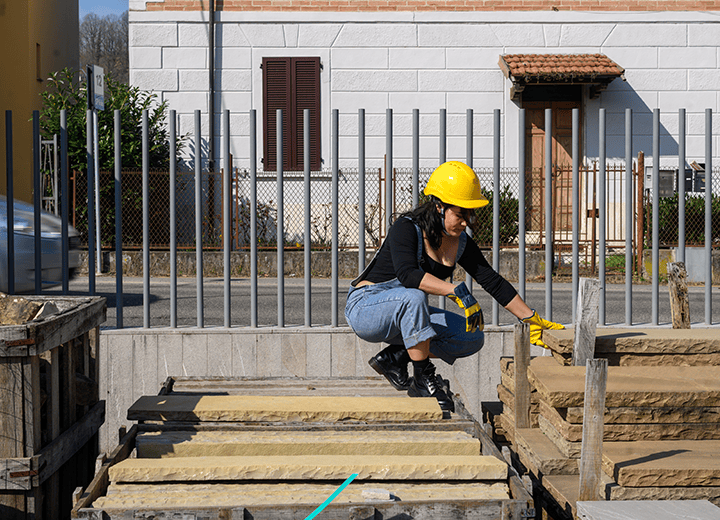
Related Masonry Services in NYC
Brownstone Restoration Across NYC & Westchester
Most of the city’s brownstones stand in Brooklyn and Manhattan, and that’s where much of our restoration work happens. We also restore brownstone facades and brownstone trim on buildings in Queens, the Bronx, and Westchester.
- Bronx
- Brooklyn
- Manhattan
- Queens
- Westchester
Brownstone Restoration FAQs
In most cases, yes. Damaged stone is cut back to a sound base and rebuilt in layers with a restoration mortar that is tinted to match. Stone is only replaced when it's too deteriorated or cracked to hold a repair.
It depends on how much of the facade has failed. Scattered damage can be patched, while a facade with widespread flaking or many failed old patches is often better resurfaced so it weathers evenly and looks uniform.
If your building is landmarked or in a historic district, yes. LPC's rules allow its staff to approve standard brownstone repair methods, and permits often require samples before work starts. If you're not in a designated area, LPC approval isn't needed.
Brownstone is a layered sedimentary stone. Water gets between the layers, freezes, and pushes them apart. Stone set with its layers on edge, and old hard cement patches that trap moisture, both speed up the damage.
Clear sealers are usually not recommended for brownstone, because they can trap moisture inside the stone and cause the face to peel. Keeping water out through sound joints, sills, and gutters protects the stone better.